
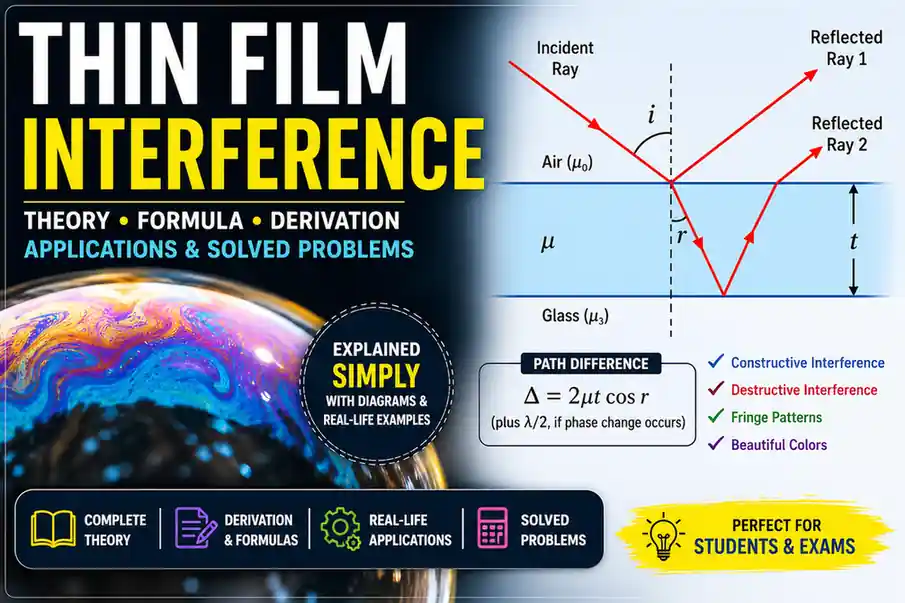
Thin Film Interference: Theory, Derivation & Solved Problems (2026)
Have you ever noticed the beautiful rainbow colors on a soap bubble or the shimmering patterns on an oil spill
Have you ever noticed the beautiful rainbow colors on a soap bubble or the shimmering patterns on an oil spill
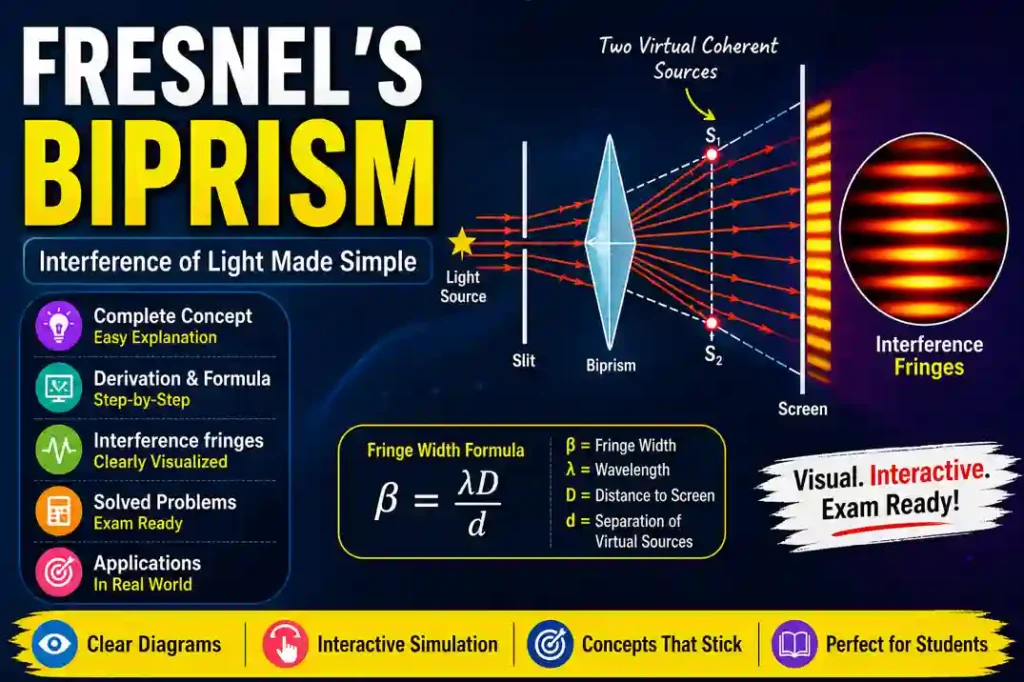
Have you ever wondered how light—something that feels so smooth and continuous—can produce beautiful alternating bright and dark patterns? This
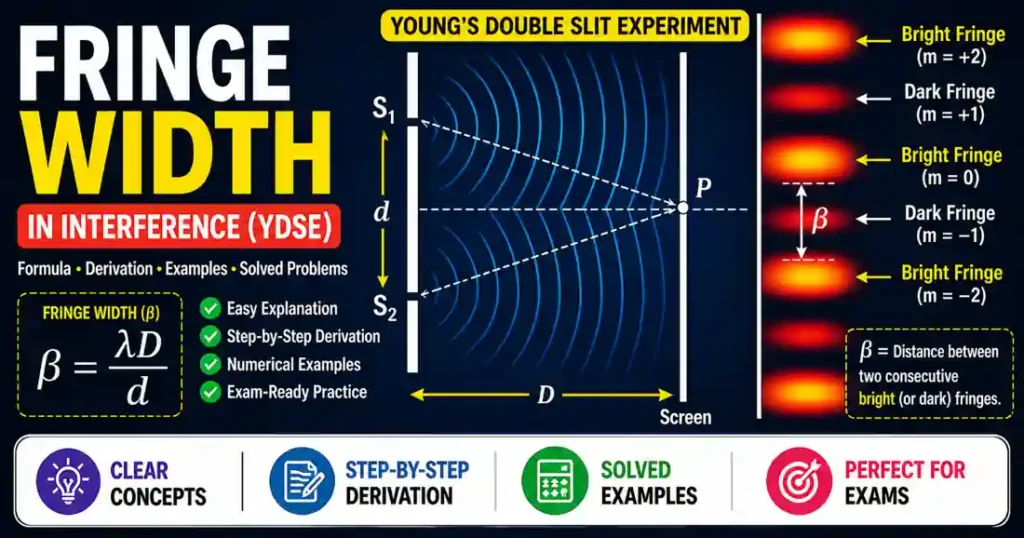
Have you ever noticed the colorful patterns on a soap bubble or the shimmering colors on a CD? These beautiful
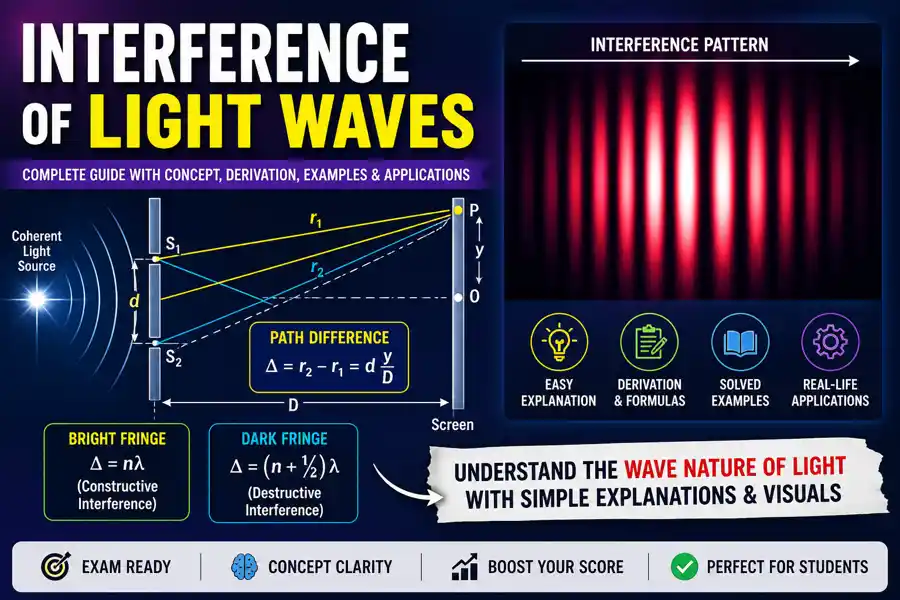
Have you ever observed a soap bubble or a thin layer of oil and noticed swirling, rainbow-like patterns? (As shown
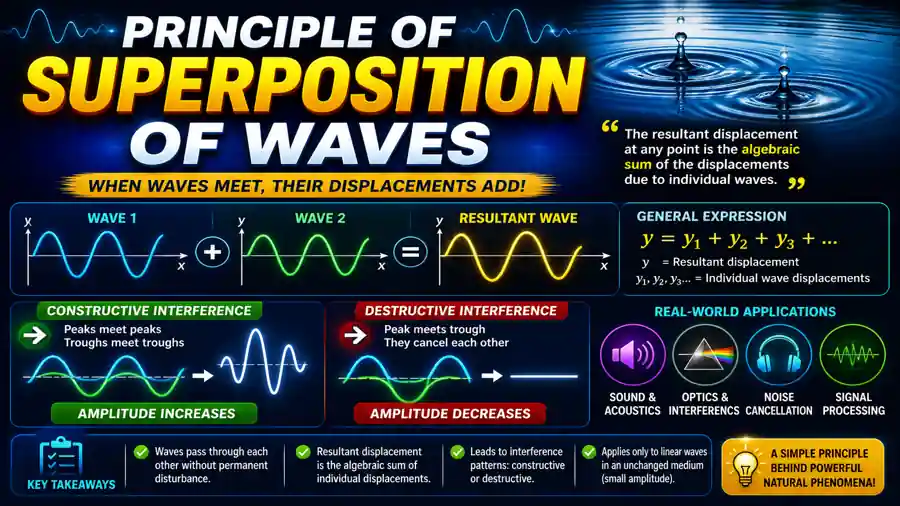
Imagine you are standing near a calm pond and you drop two stones at different points. Instantly, ripples begin to
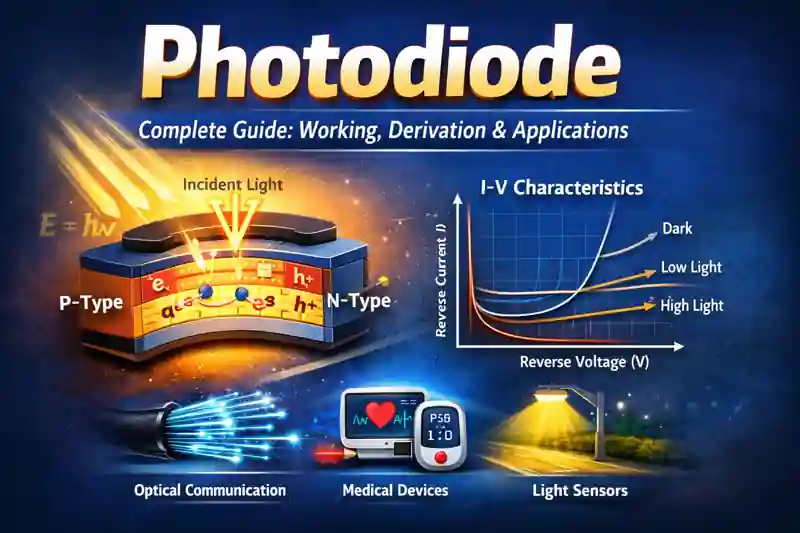
Whenever you pick up your TV remote and point it at the screen, something almost magical happens in a fraction
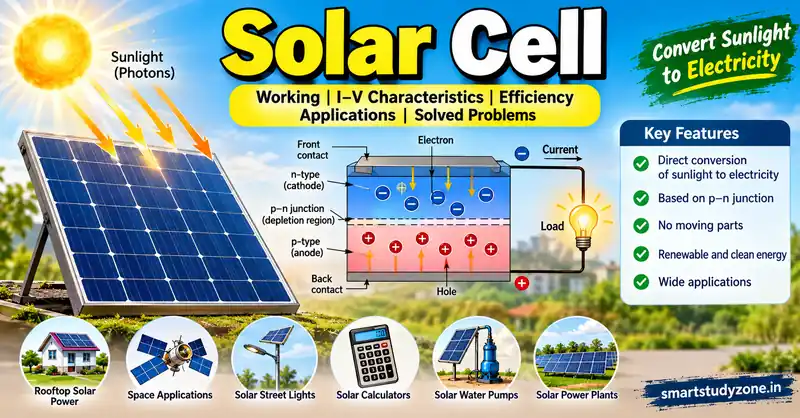
A solar cell is an electronic device that converts sunlight directly into electrical energy through the photovoltaic effect. Unlike a
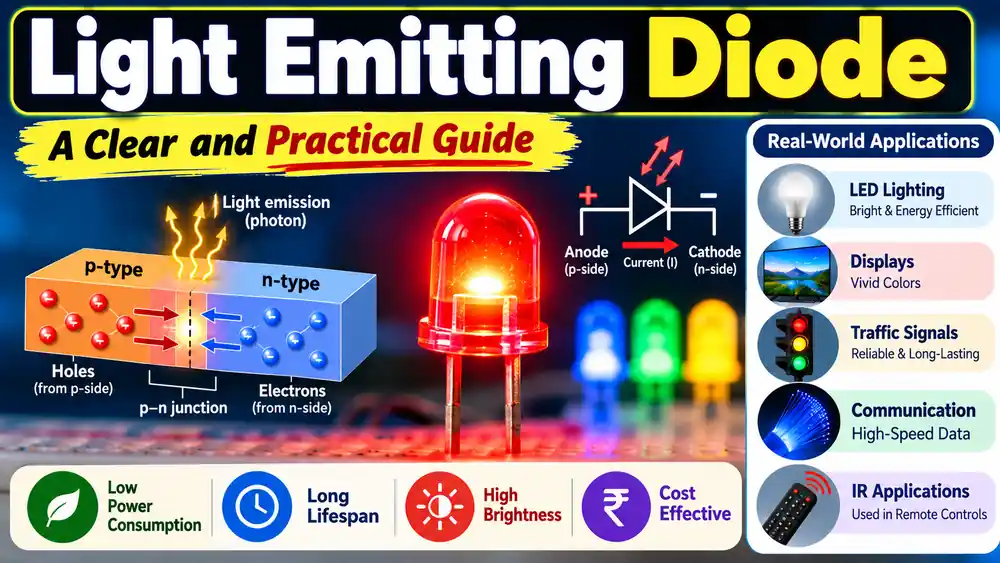
When we walk into any modern home, laboratory, or industrial setup, we will find one technology quietly transforming electrical energy
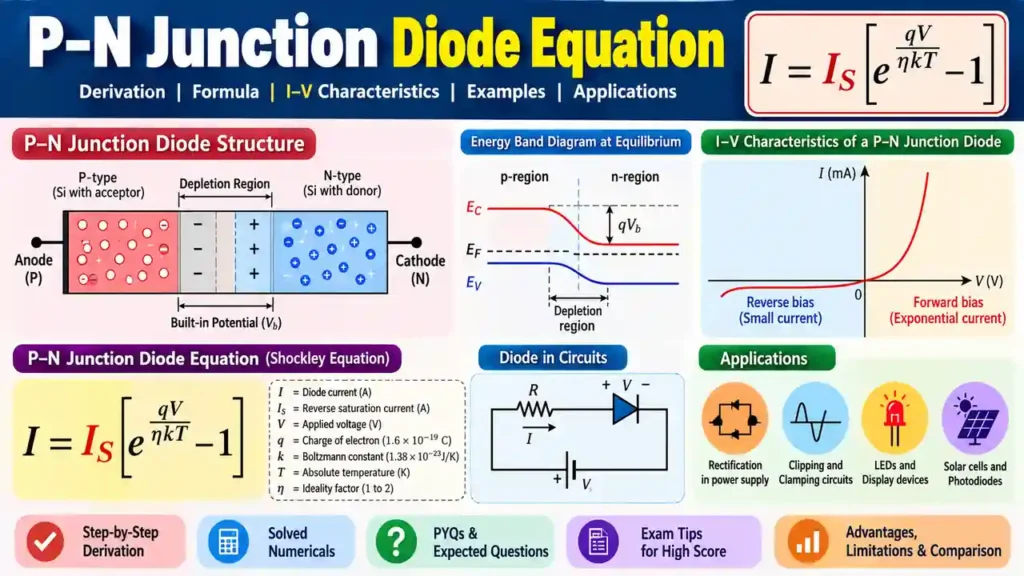
A diode has only two terminals, yet its current can change dramatically with a very small change in voltage. This
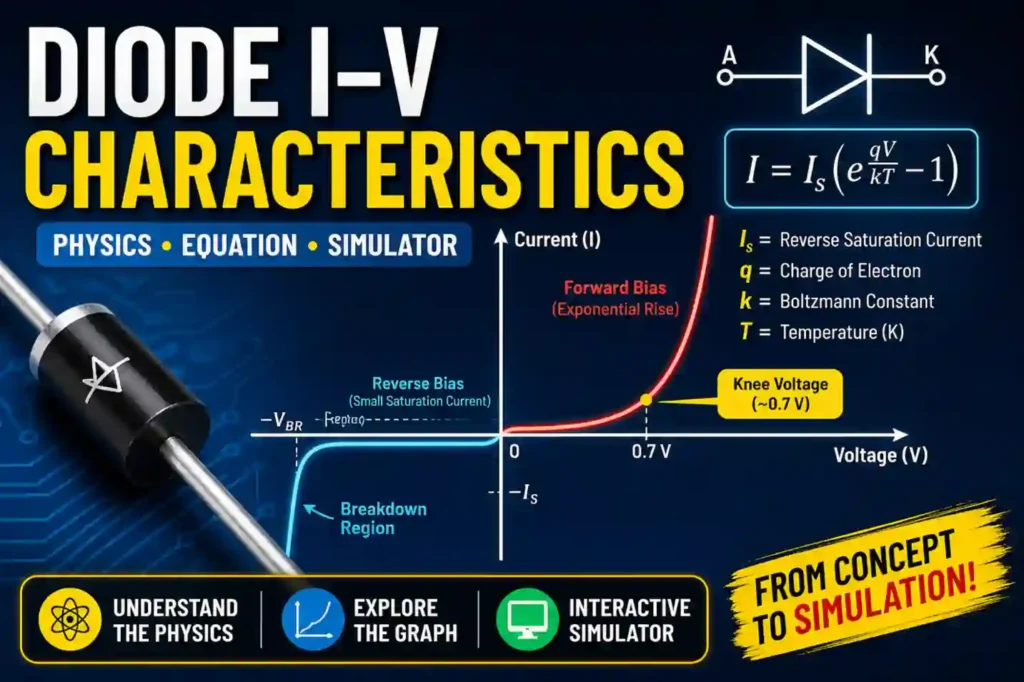
Want to understand why a diode suddenly starts conducting after a small voltage? Read the complete article below and follow
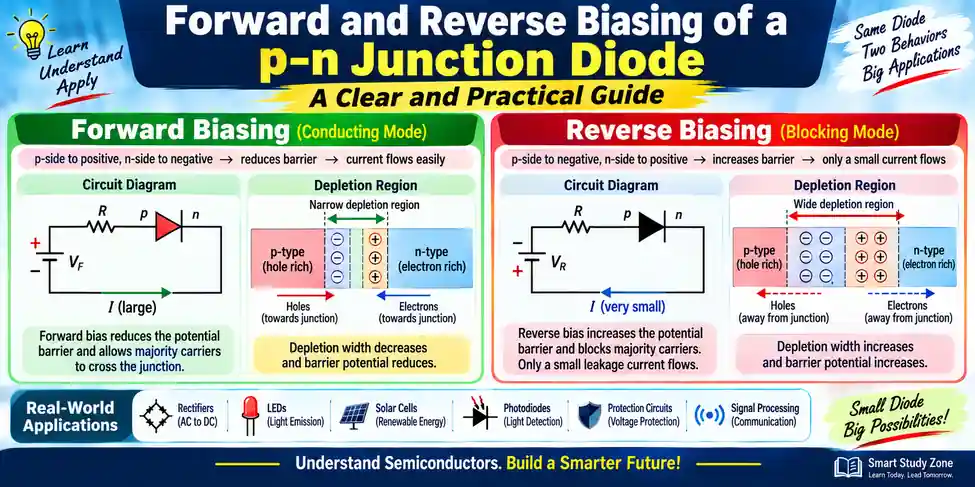
📚 Understand the physics behind diode current—not just the polarity. Read the complete guide, work through the numericals, and test
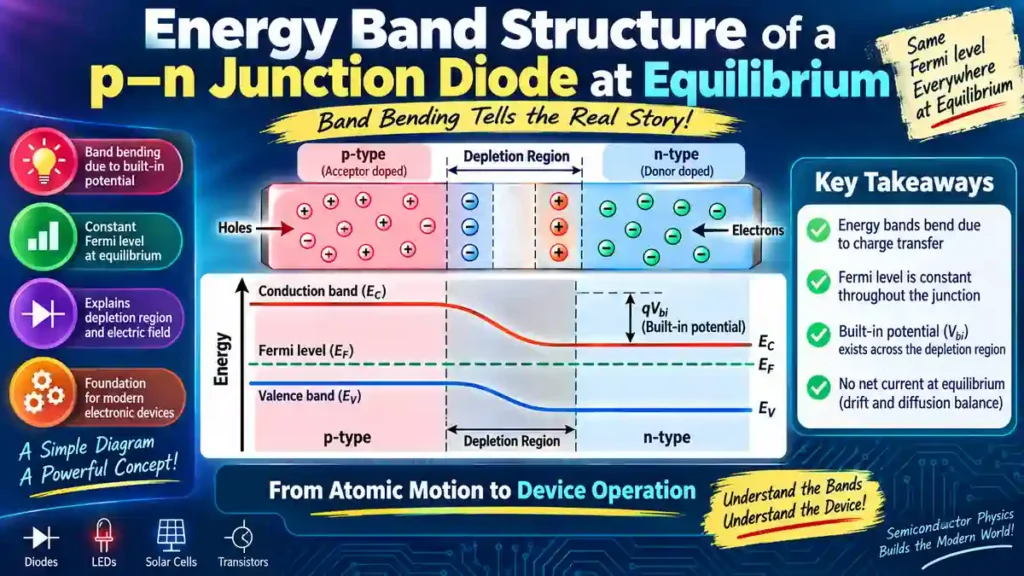
Why do the energy bands bend when a p–n junction reaches equilibrium—and what does that bending actually tell us?In this
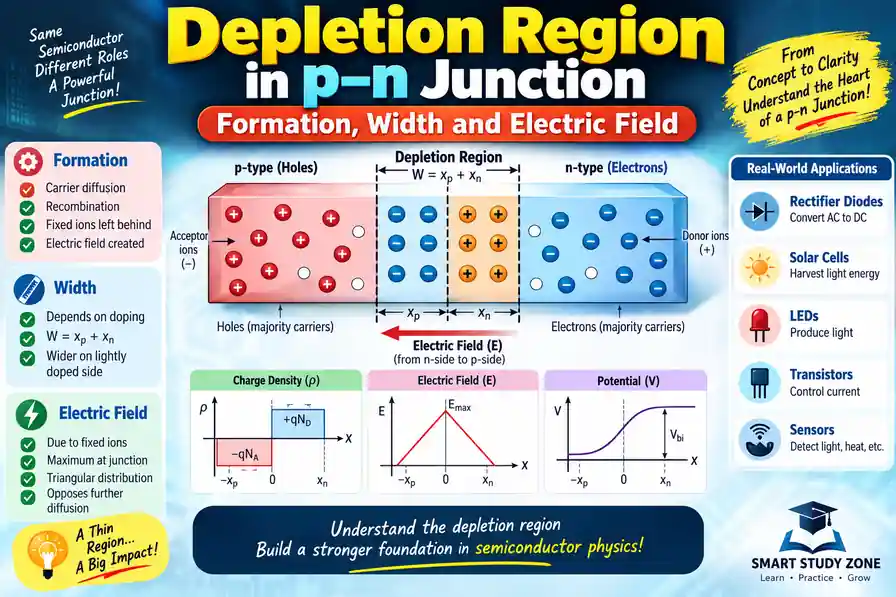
What really happens when p-type and n-type semiconductors meet? A tiny region forms at their boundary that controls how a
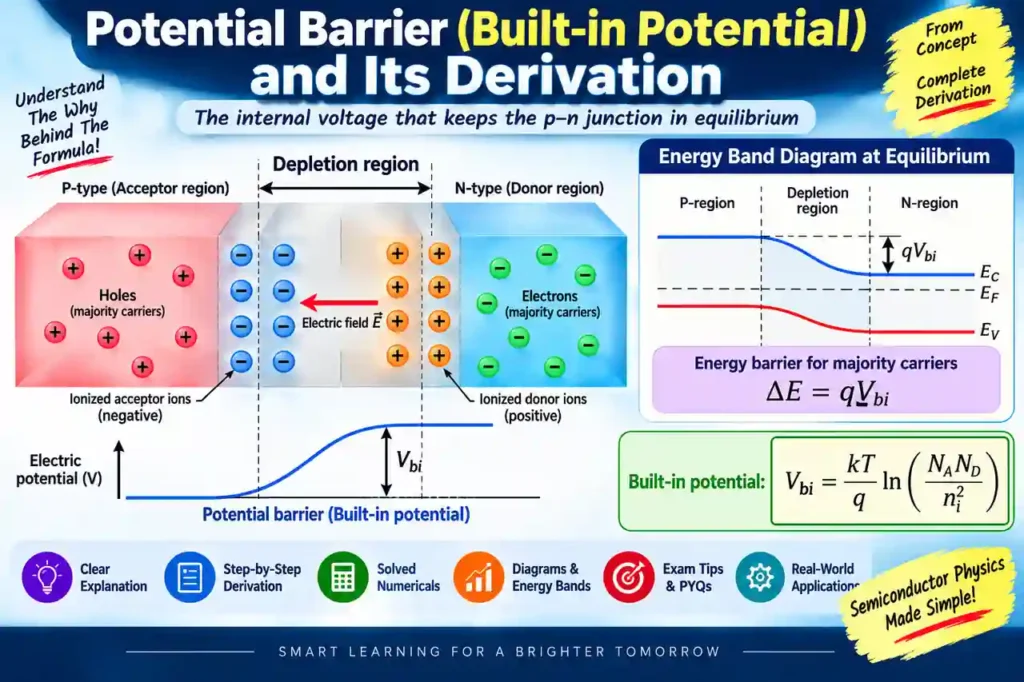
A p-n junction may look like nothing more than two semiconductor regions joined together. Still, an invisible potential barrier quietly
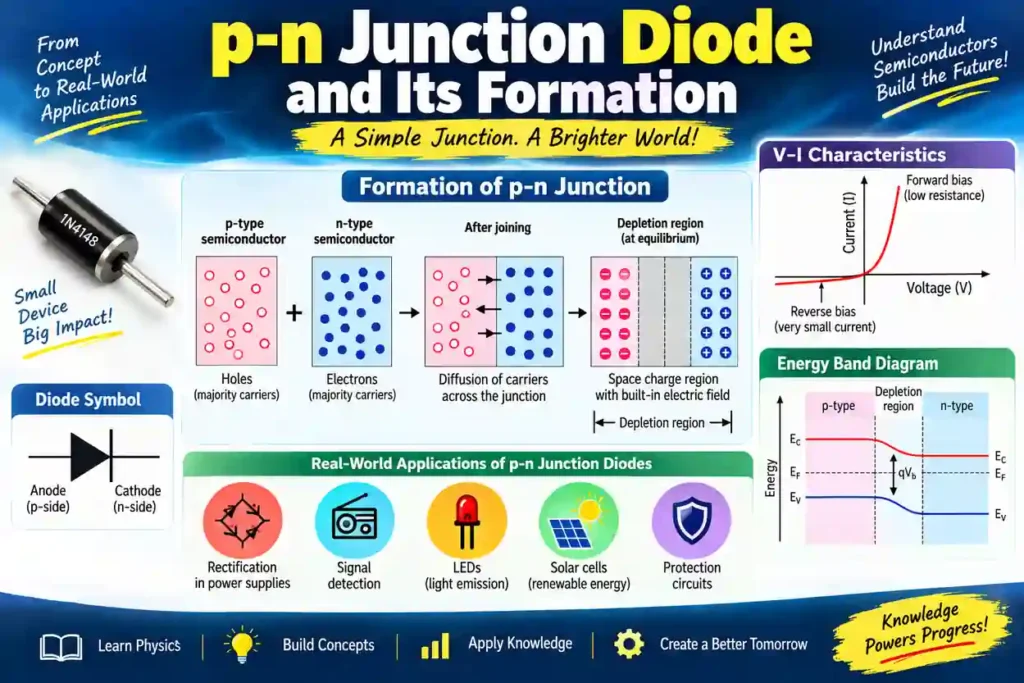
What really happens when p-type and n-type semiconductors meet, and how does this tiny junction control the flow of electric
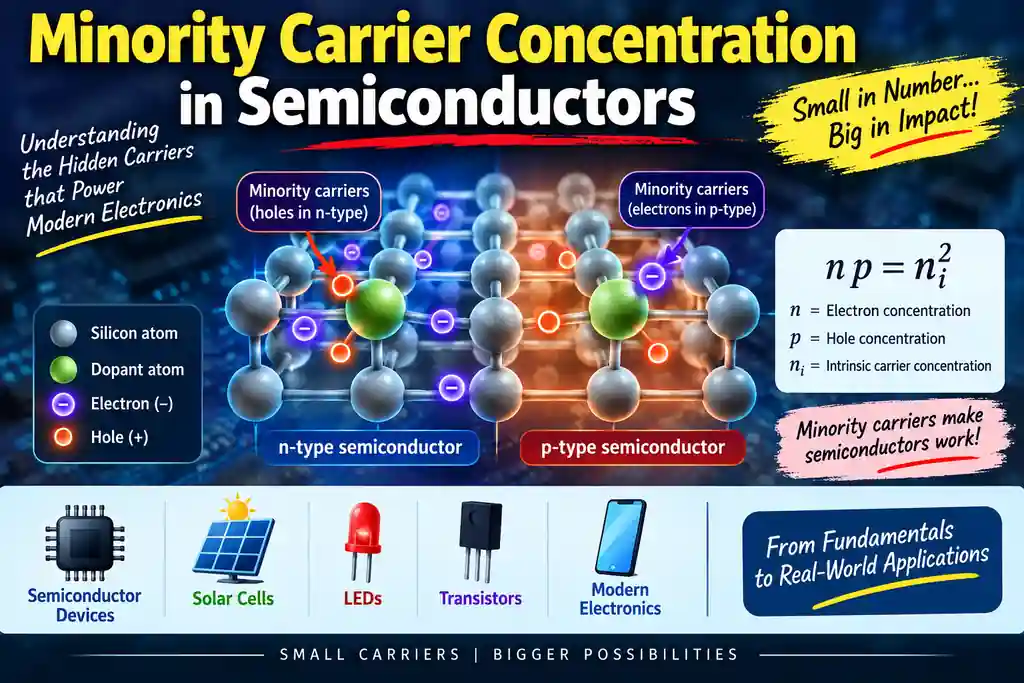
What if the smallest population of charge carriers in a semiconductor could have one of the biggest impacts on how
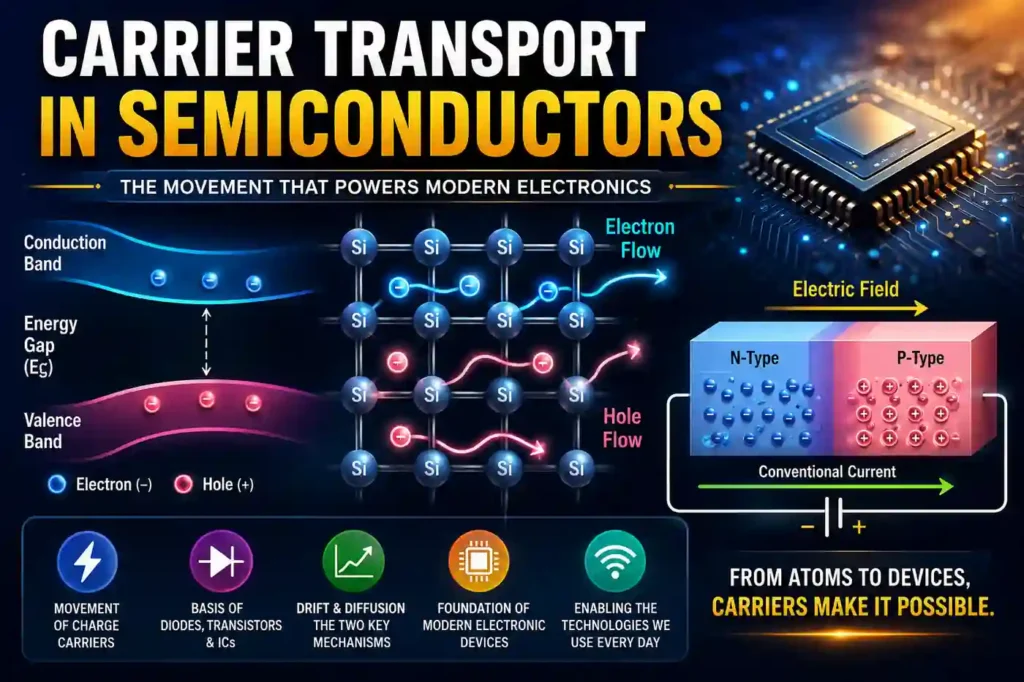
Every semiconductor device works because electrons and holes are able to move through the material in a controlled way. But
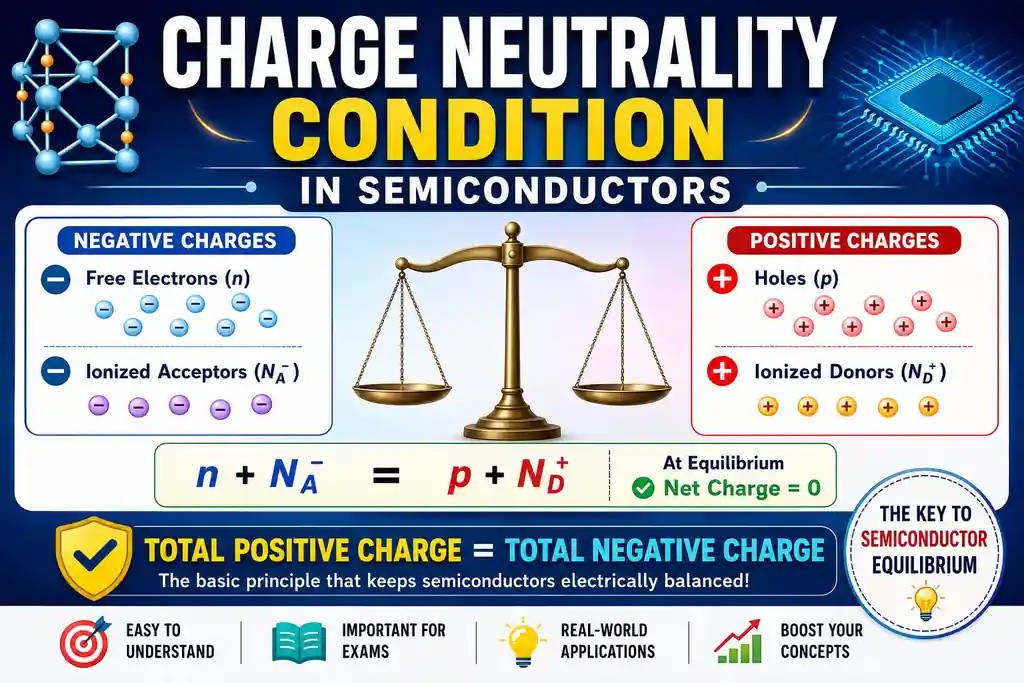
How can a semiconductor contain electrons, holes, and charged impurity ions, yet remain electrically neutral? ⚡ The answer lies in
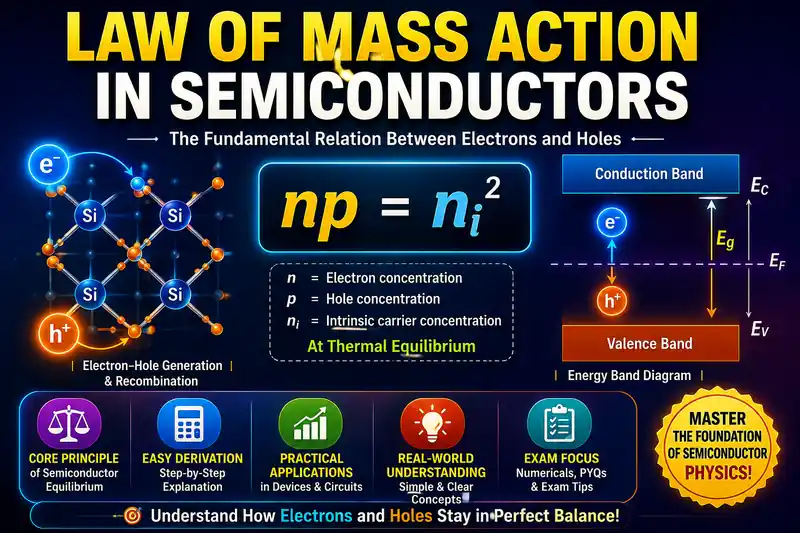
What hidden relationship keeps electrons and holes perfectly connected inside a semiconductor? 🤔To understand this fascinating balance, let us explore
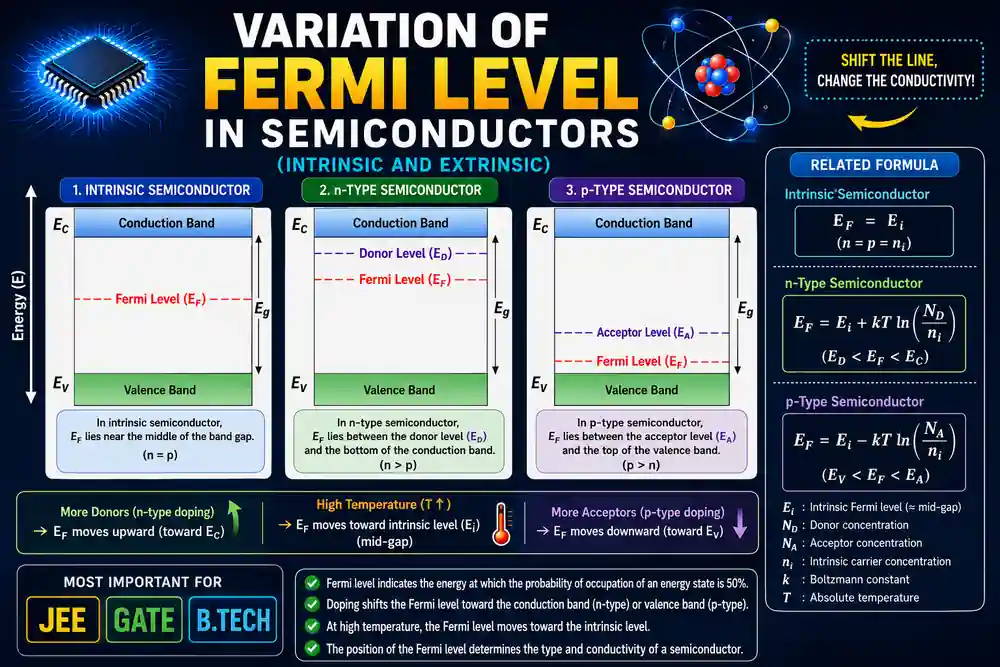
Why does doping a piece of silicon with a few boron atoms cause the variation of Fermi level inside the